Driveway pavers in Adelaide: best materials and what to consider
A driveway takes more punishment than any other paved surface around the house. It carries the weight of vehicles every day, bakes under the summer sun, and wears the first impression of your whole property. Getting the material right the first time saves money, time, and the headache of pulling it all up in a few years.
Autumn is the smart time to plan a driveway. The ground is workable, the weather is mild for laying, and a finished driveway is ready well before winter rain sets in. This guide walks through the best materials for driveway pavers Adelaide homes rely on, what each one costs, and the practical things worth thinking about before you commit.
Why choose pavers for your driveway
Poured concrete and asphalt both have their place, but driveway pavers offer a few advantages that matter over the long run. It is worth understanding them before you choose.
They handle movement without cracking
A poured concrete slab cracks when the ground shifts. Pavers are laid as individual units with joints between them, so they flex with seasonal ground movement instead of splitting. South Australian clay soils move a lot between wet and dry seasons, which makes this a real advantage.
Damaged sections are easy to fix
If a paver stains, cracks, or sinks, you lift the affected ones and replace them. There is no need to re-pour or patch an entire slab, and no mismatched concrete colour where the repair went in.
They look better and add value
A paved driveway lifts the look of a home from the street. The range of colours, textures, and laying patterns means the finish can match the house rather than fighting it, which is something a plain grey slab struggles to do.
Best materials for driveway pavers in Adelaide
The right material depends on your budget, the look you are after, and how much traffic the driveway sees. These are the options worth considering.
Concrete driveway pavers in Adelaide
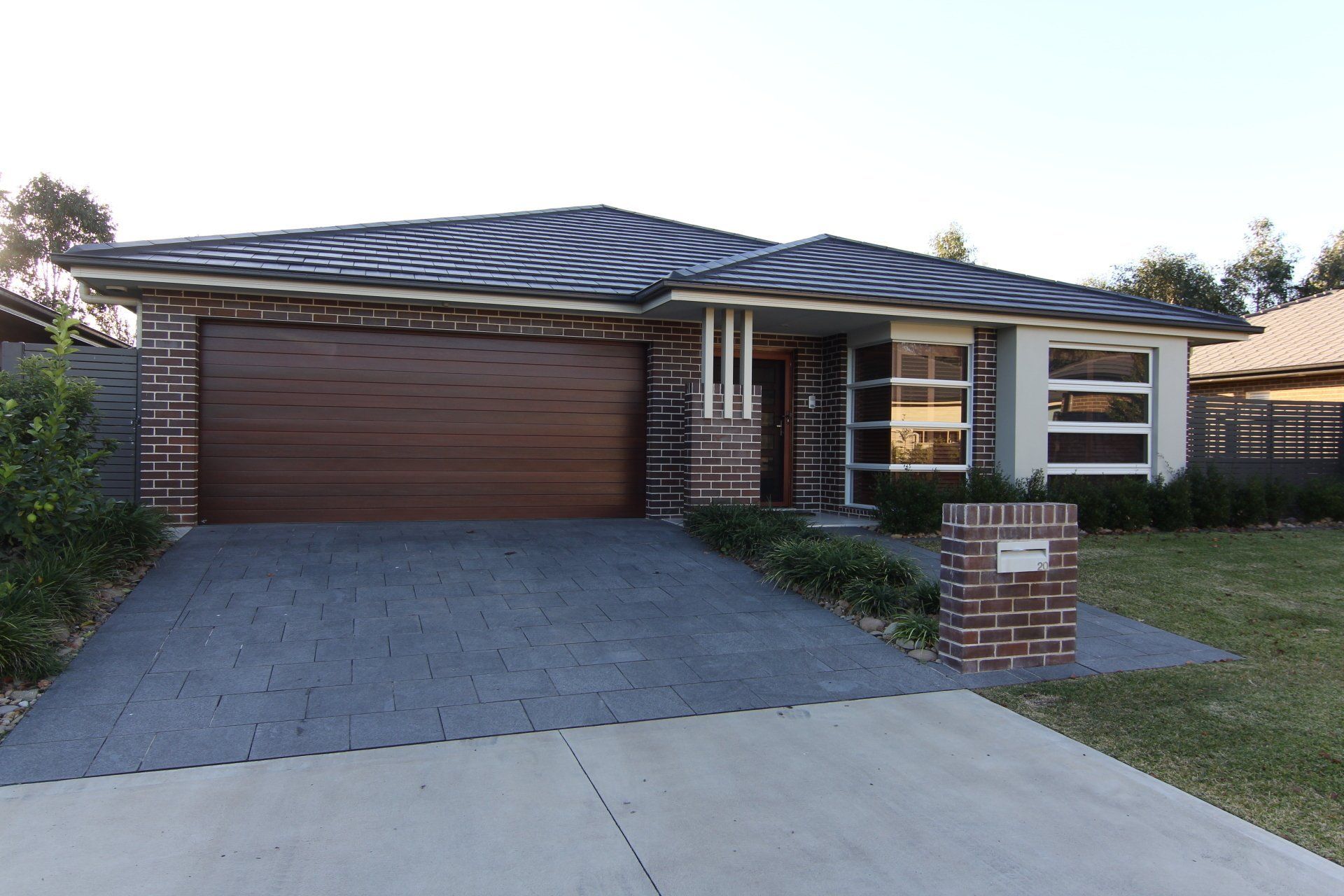
Concrete is the most popular driveway choice, and for good reason. Concrete pavers are strong enough to carry vehicle loads, resist cracking under heavy traffic, and come in a wide range of shapes, colours, and finishes. They sit at the affordable end of the scale and suit most Adelaide homes, which makes them the default starting point for many driveway projects.
Best for: most driveways, budget conscious projects, modern and traditional homes alike.
For a closer look at concrete options and pricing, read our guide to concrete pavers in Adelaide for driveways and patios.
Brick driveway pavers in Adelaide
Clay brick pavers bring a warm, classic look that holds its colour for decades. Because the colour runs right through the clay rather than sitting on the surface, brick resists fading even under harsh sun. They suit heritage homes, federation facades, and any project after a deep red or earthy tone.
Best for: character homes, traditional facades, buyers who want colour that lasts.
Natural stone pavers
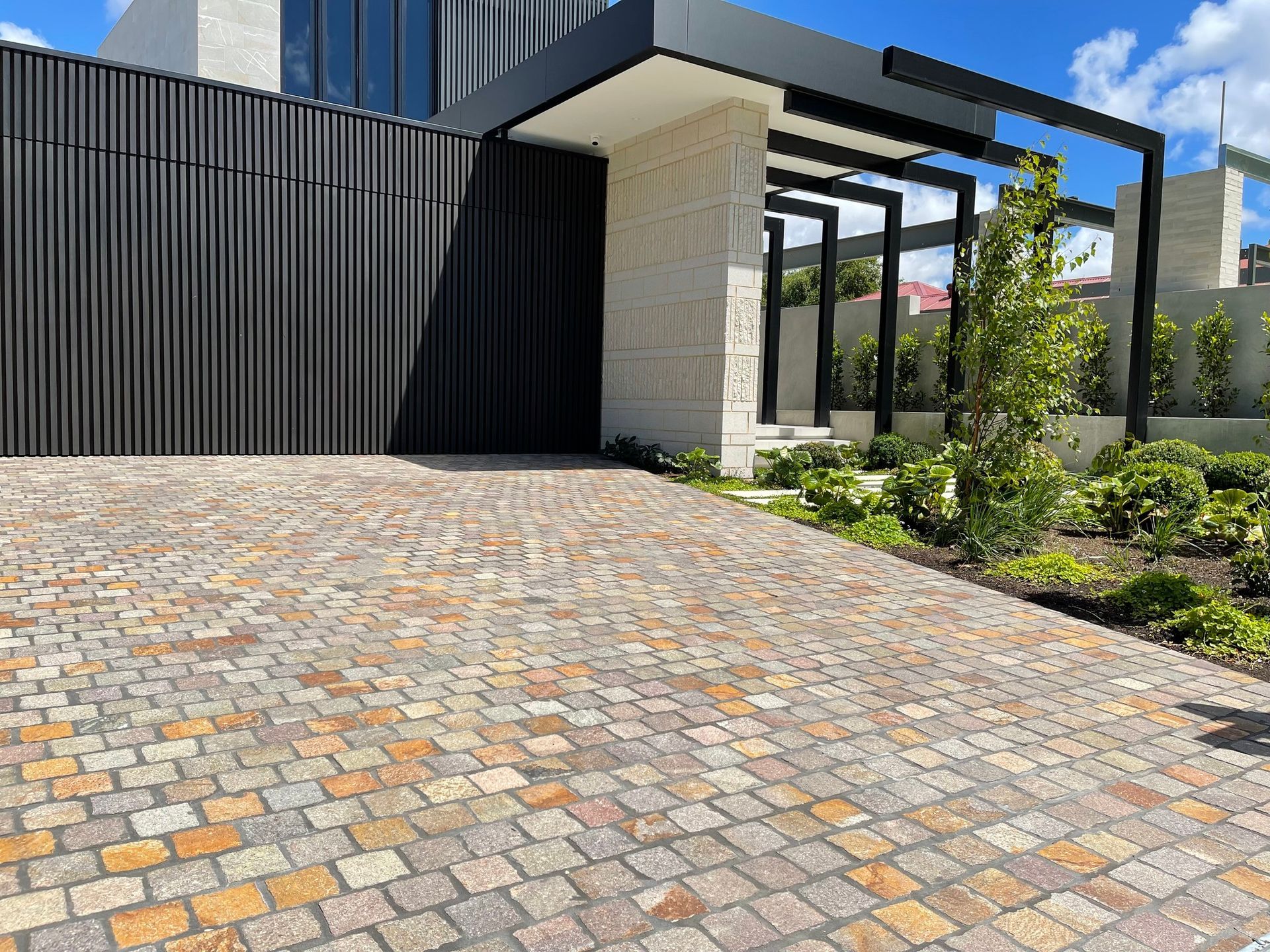
For a premium finish, natural stone such as granite and stronger limestone holds up well to vehicle traffic when laid on a proper base. Each piece is unique, so the driveway has a depth and character manufactured products cannot match. Stone sits at the higher end of the budget but rewards it with a finish that looks expensive because it is.
Best for: high end homes, feature driveways, projects where budget allows for a standout result.
Not sure how stone types compare? Our guide on the difference between natural stone and stone pavers breaks it down.
What to consider before you start
Material is only part of the decision. A few practical factors make the difference between a driveway that lasts decades and one that needs attention in a few years.
Base preparation
The base matters more than the paver. A driveway needs a deeper, more compacted base than a path or patio because it carries vehicle weight. Skimping here is the number one reason driveways sink, rut, or shift. Whatever material you choose, the groundwork underneath has to be done properly.
Drainage and fall
Water needs somewhere to go. A driveway should be laid with a slight fall away from the house and garage so rain runs off rather than pooling or flowing back towards the building. Poor drainage undermines the base over time and leads to movement.
Slip resistance
A driveway is walked on as well as driven on, often in wet weather. A textured or lightly profiled surface gives better grip than a smooth, glossy finish, which is worth keeping in mind for sloped driveways in particular.
Load rating
Not every paver is rated for vehicle traffic. Thinner pavers designed for paths or patios can crack under a car. Always confirm the paver is suitable for driveway use, especially if larger vehicles or a caravan will be parked on it.
Style and the house
The driveway should sit comfortably with the home and any existing paving. Matching or complementing the colour of the roof, render, or brickwork ties the look together. Bringing a photo of the house into the showroom makes it much easier to get this right.
What does driveway paving in Adelaide cost
The cost of driveway paving in Adelaide depends on the material, the size of the area, site access, and how much base work is needed. Concrete pavers sit at the more affordable end, brick in the middle, and natural stone at the premium end. A sloped or hard to access site, or one that needs significant excavation and base build up, adds to the figure.
The most reliable way to budget is a proper quote based on your actual driveway. Our clearance specials are also worth a look if you are working to a tight budget, since quality pavers at a reduced price can bring a larger project within reach. Call us on 08 7092 5984 for a guide based on your project.
Should you lay it yourself or hire a professional
A driveway is at the harder end of DIY paving. The base preparation, drainage falls, edge restraints, and load considerations all need to be right, and mistakes are expensive to undo once vehicles start using the surface. For a small, flat, well drained area a confident DIYer can manage it, but most people are better off with professional installation for a driveway.
We can supply the pavers for a DIY project, or handle the full job from base preparation through to the finished surface. Our driveway paving team works across Adelaide and can advise on the right material and build for your site.
Plan your driveway with Playford Pavers
The easiest way to choose driveway pavers in Adelaide is to see them in person. Visit our Salisbury North showroom to compare colours, textures, and finishes, pick up samples, and talk through your project with a team that has more than 20 years of combined experience. As a family owned South Australian business, we are happy to give honest advice on what suits your driveway and your budget.
Browse the full driveway pavers range online, explore all our paving options, or call 08 7092 5984 for a free quote.
3 Christopher Court, Salisbury North, SA 5108
Open: Monday to Friday 8am to 4pm, Saturday 9am to 3pm
Frequently Asked Questions
What are the best pavers for driveways in Adelaide?
Concrete pavers are the most popular all rounder for value and durability. Brick pavers suit character homes and hold colour well, while natural stone is the premium option for a standout finish. The best choice comes down to your budget, the style of your home, and how much traffic the driveway carries.
How thick should driveway pavers be?
Driveway pavers should generally be at least 50mm thick, and 60mm or more is common for areas carrying heavier vehicles. Thinner pavers designed for paths or patios are not rated for vehicle loads and can crack. Always confirm a paver is suitable for driveway use before buying.
Are paved driveways better than concrete or asphalt?
Pavers flex with ground movement instead of cracking like a poured slab, and damaged sections can be lifted and replaced individually rather than re-poured. They also offer far more choice in colour and pattern. Concrete and asphalt can be cheaper upfront, but pavers tend to look better and are easier to repair over time.
How long do driveway pavers last?
With a properly prepared base and quality pavers, a paved driveway can last 20 to 30 years or more. Lifespan comes down to base preparation, drainage, and the quality of the pavers, which is why getting the groundwork right matters as much as the paver you choose.
Do driveway pavers need sealing?
Sealing is optional but recommended for driveways. A quality sealer helps resist oil stains, tyre marks, and weathering, and makes the surface easier to clean. We stock a range of sealers alongside our paving products. Re-seal every few years for best results.
Can I lay a driveway myself?
A small, flat, well drained driveway is achievable for a confident DIYer, but the base preparation, drainage, and load requirements make driveways one of the harder paving projects to get right. For most people, professional installation is the safer choice given the cost of fixing a driveway that shifts or sinks.